One of the most frequent questions during invisible orthodontic treatment is whether anything really happens if you don't wear the aligners for all the indicated hours.
And the short answer is yes: the duration of use directly influences how teeth move and the predictability of treatment.
But this doesn't mean a patient has "ruined" their orthodontics because of a few bad days or occasional periods of less frequent use. Invisible orthodontics doesn't work as rigidly or dramatically as it's often portrayed.
The important thing is to understand how tooth movement occurs, why the duration of use is so important, and what differences exist between children, adolescents, and adults.
Because not all teeth move the same way, not all treatments require the same level of control, and not all patients respond the same biologically.
The good news is that, when the patient understands the process and there is good planning, most situations can be perfectly redirected.
Why is it important to wear the aligners for the recommended hours?
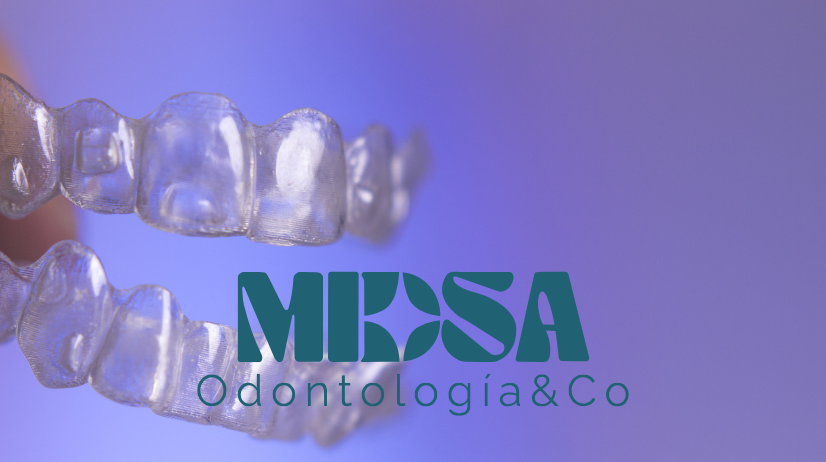
Aligners work by applying gentle, continuous forces to the teeth to produce progressive, controlled movements.
For that movement to occur correctly, the tooth needs to receive that force for a sufficient number of hours per day.
Therefore, most invisible orthodontic systems recommend an approximate use of:
- 20–22 hours daily.
It's not just about "moving teeth," but about allowing:
- bone,
- periodontal ligament,
- musculature,
- and bite,
adapt correctly to each change.
When aligners are worn for far fewer hours than necessary, the teeth can:
- move more slowly,
- not fully adapt,
- or lose some of the precision of the planned movement.
You can learn more about the treatments of Invisible orthodontics in Valencia at MIDSA Dentistry.
What can happen if they are not used correctly?
Not all tooth movements are equally difficult.
There are relatively simple movements and others that require much more precise and constant control.
The aligners can “stop fitting”
One of the first signs is usually that the aligner:
- It remains lifted,
- It doesn't fit perfectly.,
- or it seems "loose" in some areas.
This may indicate that the tooth has not followed the expected movement exactly.
Some movements are especially sensitive
Certain movements require consistent use of the aligners, for example:
- rotations,
- extrusions,
- root movements,
- expansion,
- or complex bite corrections.
In these cases, using the aligners for fewer hours can have a greater impact on the accuracy of the treatment.
The treatment may be prolonged
When teeth do not follow the planned sequence correctly, sometimes it is necessary to:
- repeat aligners,
- make refinements,
- add more phases,
- or modify part of the treatment plan.
And that can increase the total duration of orthodontic treatment.
Is it the same in children, adolescents, and adults?
Not quite.
The biological response to tooth movement changes according to age, growth, and type of treatment.
In children and adolescents
Growing patients often have:
- more adaptable bone,
- more active bone metabolism,
- and greater biological response capacity.
Therefore, in some cases, short periods of reduced use can be more easily compensated for.
However, it also has a significant impact on children and adolescents:
- collaboration,
- oral habits,
- breathing,
- swallowing,
- and the development of the jaws.
In addition, many pediatric treatments not only aim to align teeth, but also to guide growth and improve oral function.
You can learn more about Children's orthodontics in Valencia in our clinic.
In adults
In adults, tooth movement usually requires more precise and constant control.
Especially when there are:
- wear and tear,
- tooth loss,
- recessions,
- previous treatments,
- or functional alterations.
Adult bone responds somewhat more slowly and is less adaptable than in young patients, so consistency is often even more important.
This doesn't mean that teeth can't be moved properly in adults. In fact, excellent treatments are available today. But patient cooperation plays a fundamental role.
What matters is not perfection: it's consistency.
Many patients become distressed if one day:
- They have been without aligners for many hours,
- They've gone out to eat,
- They've had a trip,
- or have been less consistent over a season.
And here it is important to send a realistic and positive message:
Invisible orthodontics does not work in "all or nothing mode".
A single bad day does not usually ruin the treatment.
The problem arises when:
- Underuse becomes commonplace,
- The aligners are only worn at night.,
- or there is a continuous lack of adaptation.
That's why the most important thing is to regain consistency as soon as possible and maintain good communication with the orthodontist.
What do we do at MIDSA when an aligner doesn't fit properly?
Each patient responds differently to treatment.
Therefore, during the reviews we assess:
- how are the movements expressing themselves,
- If the aligners adjust correctly,
- bite stability,
- the function,
- and the biological evolution of each case.
In some patients we simply recommend:
- Keep the aligner in place for more days,
- use chewies,
- improve usage hours,
- or reinforce certain movements.
And in other cases it may be necessary:
- perform refinements,
- add new aligners,
- or adapt part of the treatment.
The goal is not to "blame" the patient, but to help the treatment work properly again.
Frequently asked questions about using aligners
Does one day without aligners ruin the treatment?
Not usually. An isolated day rarely causes a major problem. The important thing is to get back to your normal routine as soon as possible.
What happens if I only use them at night?
In most cases, it will not be enough to maintain predictable and stable tooth movements.
Do all tooth movements require the same monitoring?
No. Some movements are much more sensitive to the lack of consistent use of aligners.
Do children adapt better than adults?
Biologically they tend to have a faster response, but collaboration and habits remain fundamental.
What do I do if my aligner no longer fits properly?
It is best to contact the clinic before moving on to the next aligner to assess how to address the situation.
Invisible orthodontics works best when the patient understands the process
Collaboration doesn't mean doing everything perfectly, but understanding how the treatment works and maintaining reasonable consistency on a daily basis.
In MIDSA Dentistry, We understand invisible orthodontics from an individualized and functional perspective, adapting each treatment to the growth, biology, and real needs of each patient.
If you have questions about your treatment or would like to see if invisible orthodontics can help you, you can request an initial consultation at Our dental clinic in Valencia to study your case in a personalized way.