Find out how long a invisible orthodontic treatment, What factors influence the time and how it can be safely accelerated depending on each case.
HOW LONG DOES INVISIBLE ORTHODONTIC TREATMENT LAST? ACTUAL DURATION, PHASES, AND INFLUENCING FACTORS
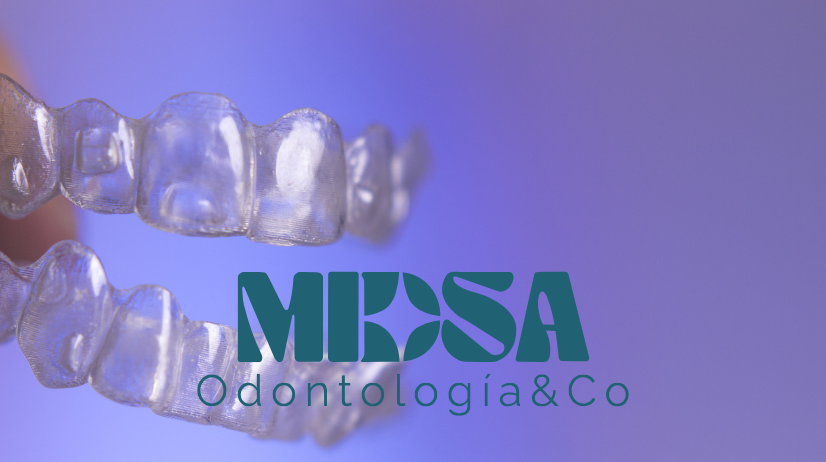
Invisible orthodontics is one of the most popular treatments among adults due to its comfort, aesthetics, and ability to integrate seamlessly into daily life. However, one of the most frequent questions before starting treatment is: “How long will I have to wear the aligners?”
The duration of treatment depends on the type of malocclusion, the aesthetic goal, the digital planning, and, above all, the patient's adherence to treatment. At MIDSA Dentistry, we use advanced digital technology, the iTero intraoral scanner, and a precise study to offer realistic treatment timelines from the outset.
Below, we offer a complete guide with clinical data, comparisons, and answers to the most common questions.
1. ACTUAL DURATION RANGES
Mild cases (4–8 months):
• slight crowding
• small rotations
• spaces between teeth
• Touch-ups after previous orthodontics
Moderate cases (8–14 months):
• moderate crowding
• more pronounced rotations
• midline correction
• mild crossbite
Complex cases (12–24 months):
• deep bite
• open bite
• functional discrepancies
• significant root movements
2. FACTORS THAT INFLUENCE DURATION
Bite complexity: The more severe the malocclusion, the longer the duration.
Patient consistency: The most important factor. The aligners must be worn 22 hours a day.
Quality of digital planning: An optimized 3D plan reduces time and minimizes refinements.
Gum health: If inflammation is present, the gum is stabilized first.
Patient's age: Movement is predictable in adults; not necessarily slower.
3. CAN THE TREATMENT BE SPEED UP?
Yes, in selected cases.
• Aligner changes every 5 days.
• Correct use of chewies.
• Frequent digital monitoring.
• Avoid hot drinks while wearing the aligners.
4. TREATMENT PHASES AND THE DURATION OF EACH
Digital studio (30–45 min):
3D scanner, clinical photos, functional analysis, diagnosis.
Planning (5–7 days):
It does not add time to the active treatment.
Active phase:
Aligner changes every 7–10 days depending on the case.
Additional refinements or alienators
Minor final corrections (4–12 weeks).
Retention:
Nighttime use of retainers to maintain results.
5. WHICH CASES ARE FASTER AND WHICH ARE SLOWER?
Faster:
• diastemas
• slight crowding
• very consistent patients
Slower:
• open bites
• posterior intrusions
• severe rotations
6. DOES THE BRAND OF THE ALIGNER MATTERS?
Being a high-quality brand, the determining factor is:
• diagnosis
• planning
• clinical performance
• biological response
• patient record
7. TIPS TO REDUCE TREATMENT TIME
• Don't skip appointments
• Change the aligners when appropriate
• Maintain excellent hygiene
• Do not remove your aligners to "peck"“
• Avoid hot drinks
• Report in case of fracture or loss
CONCLUSION
The duration of treatment depends on the complexity of the case, but with good planning and consistency, most adults complete their treatment within 6 to 14 months. Complex cases may take up to 24 months, always with highly predictable results.
CTA MIDSA
At MIDSA Dentistry we perform a complete digital study with 3D scanning and results simulation so that you know exactly how long your treatment will last before you start.
First visit without obligation
Calle Salamanca 52, Valencia · 692 129 485