The crossbite in children It is one of the most common occlusion problems in children's orthodontics. It often goes unnoticed by parents, but it has a direct impact on the facial growth, the chewing, the joint health and the aesthetic harmony of the child.
The good news: when diagnosed early, treatment is Fast, simple and very effective.
In MIDSA Dentistry (Valencia) We evaluate cases of crossbite daily and know that intervening at the appropriate age prevents serious complications in adolescence and adulthood.
1. What is a crossbite?
A crossbite occurs when the The upper teeth close inside the lower teeth., instead of being left out as happens in a correct occlusion.
It can manifest itself in different ways:
- On one side of the mouth only (unilateral crossbite).
- On both sides (bilateral crossbite).
- At the front (anterior crossbite).
Each type affects growth differently. maxillary and the jaw, Therefore, it requires a specialized assessment.
2. Types of crossbite
- Unilateral posterior crossbite: One side bites "upside down".
- Bilateral posterior crossbite: Both sides bite from the inside.
- Anterior crossbite: The upper teeth are behind the lower teeth.
3. Most frequent causes
A crossbite can be due to one or more causes:
- Lack of growth of maxilla
- Oral habits (thumb sucking, prolonged pacifier use, chewing)
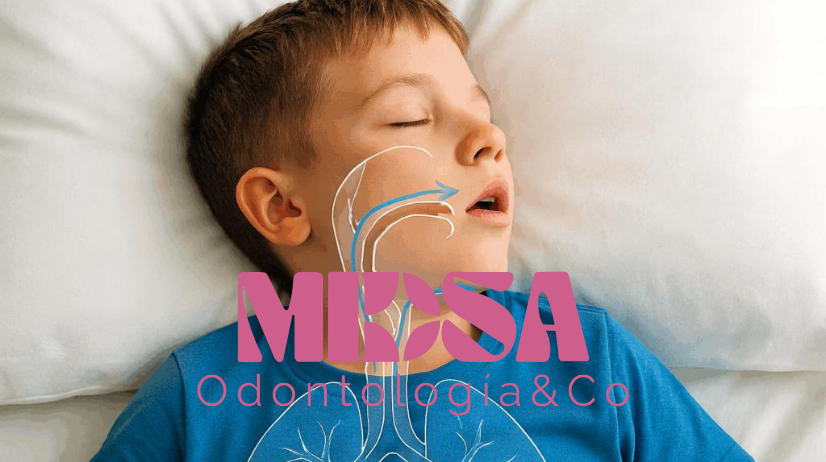
- Mouth breathing or functional breathing problems
- “Pillow-ing” or incorrect support while sleeping
- Functional deviations when chewing
- Premature loss of baby teeth
- Genetic factors
Many of these factors can be corrected if they are detected early.
4. How to detect it at home: signs for parents
A crossbite may be present if you observe:
- The child always chews in the same direction
- The chin deviates when the mouth is closed
- The upper teeth are "on the inside" when biting.
- Clicks or sounds when closing
- Uneven wear of the teeth
- Narrow or “high” palate”
- Difficulty pronouncing certain words
When in doubt, an early check-up with a doctor is essential. pediatric dentist or specialized orthodontist.
5. Why it's important to correct it as soon as possible
The crossbite It doesn't correct itself; On the contrary, it tends to worsen with growth.
Treating it early allows:
- To guide the correct growth of the jaw
- Prevent facial asymmetries
- Avoiding problems with temporomandibular joint (TMJ)
- Improve chewing and function
- Prevent permanent jaw deviations
- Reducing the need for complex or even surgical treatments later on
6. Ideal age for treatment
The earlier it's detected, the better. The ideal period is when the The jawbone is in full development, because the bones respond more quickly to treatment.
7. Most commonly used treatments
Treatment depends on the diagnosis, but the most common are:
- Maxillary expansion by disjunction devices
- Children's aligners
- Functional appliances
- Interceptive orthodontics
- Myofunctional therapy (speech therapy)
At MIDSA, Dr. Teresa Santoyo It conducts a comprehensive study to determine the safest and most effective option.
8. How long does the treatment last?
At early ages, correction is rapid:
- Between 6 and 10 months in most cases
- Follow-up monitoring to ensure stability and adequate growth
9. Consequences of not treating it
If no action is taken, the following may occur:
- Permanent facial asymmetries
- Premature tooth wear
- Joint pain or TMJ problems
- Difficulty chewing
- Need for complex orthodontics in adolescence
- Significant aesthetic and functional impact
Conclusion
Crossbite is a common problem but very easy to correct When action is taken at the right time. Early intervention prevents future problems and ensures harmonious facial development.
In MIDSA Dentistry (Valencia) we have 3D scanner, clinical photography, posture study and a Specialized focus on children's orthodontics to achieve safe and lasting results.
First visit free