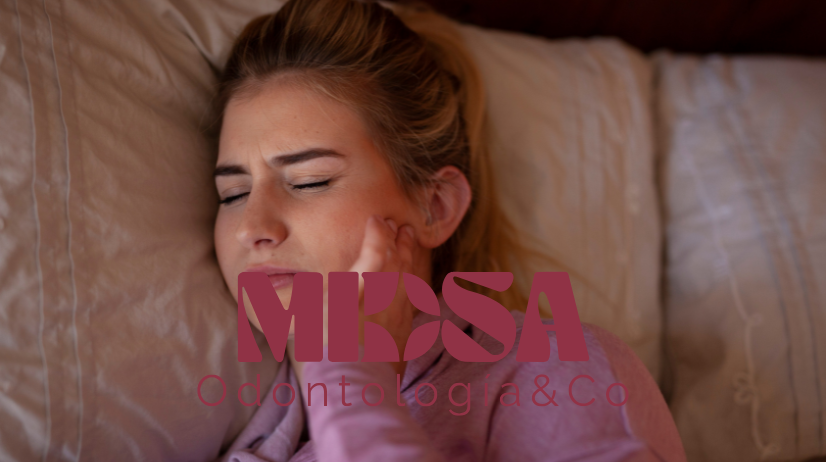
Bruxism is much more complex than many people imagine. Although it is often simply associated with "grinding your teeth due to stress," the reality is that multiple factors can underlie teeth clenching, affecting the overall functioning of the mouth and body.
Some patients wake up with:
- jaw pain,
- cervical tension,
- tooth wear,
- headaches,
- sensation of pressure in the face,
- or even fractured teeth,
without really being aware that they are squeezing or overloading their chewing system during the day or night.
The problem is that many times the treatment is limited to simply providing a splint, without trying to understand what is really causing that muscle and joint overload.
And although a splint can help protect the teeth, it doesn't always solve the root of the problem.
In many cases, bruxism is the manifestation of a deeper functional imbalance related to biting, breathing, musculature, posture, or certain altered oral patterns.
What exactly is bruxism?
Bruxism is excessive activity of the masticatory muscles that causes:
- tightening,
- grinding,
- jaw tension,
- or muscle overload.
It can happen:
- during sleep,
- during the day,
- or both situations.
Some patients clench their teeth almost silently, while others grind intensely during the night.
Over time, this can lead to:
- tooth wear,
- fractures,
- sensitivity,
- muscle pains,
- joint overload,
- gum recession,
- or more complex functional problems.
You can learn more about the treatments of Functional dentistry and oral rehabilitation at MIDSA at our dental clinic in Valencia.
Why do some people clench their teeth?
There is no single cause.
Today we know that bruxism usually has a multifactorial origin, where different body systems are involved at the same time.
Stress and emotional tension
Stress can increase muscle activity and promote muscle tightening, especially at night.
However, not all patients with stress develop severe bruxism. That's why there are often other associated factors.
Functional alterations of the bite
When the bite is not functioning in a balanced way, some muscles may work harder than necessary trying to stabilize the system.
In certain cases, the following appear:
- muscle overload,
- mandibular compensations,
- or unstable closing patterns.
This is where a detailed functional study becomes especially important.
Breathing, tongue and oral function
There is an increasing relationship between:
- mouth breathing,
- poor tongue position,
- impaired swallowing,
- chewing patterns,
- and mandibular muscle overload.
A patient who does not breathe correctly or who maintains an improper tongue and jaw position may develop chronic tension in the masticatory system.
Body posture
The jaw does not function in isolation from the rest of the body. Cervical and cranial posture also influences the facial and jaw muscles.
Therefore, some patients with:
- cervical tension,
- forward head,
- or postural imbalances,
They exhibit more symptoms of muscle tightness or fatigue.
The first real step: a comprehensive functional study
At MIDSA, the approach to bruxism begins by trying to understand why the patient is clenching and what is disrupting the masticatory system.
Because not all patients need the same treatment.
Therefore, we conducted a comprehensive functional study assessing:
- bite,
- musculature,
- temporomandibular joint,
- breathing,
- chewing pattern,
- swallowing,
- tongue position,
- cervical and cranial posture,
- and possible functional compensations.
In some cases we also use complementary tools such as HBTC-RFA within the functional analysis of the patient.
The goal is not only to reduce symptoms, but to identify what factors are maintaining muscle overload and tightness.
Orthodontics and functional stability: much more than just aligning teeth
In some patients, tooth position and bite play an important role in jaw muscle tension.
When it exists:
- occlusal instability,
- bite collapse,
- severe crowding,
- or functional compensations,
The muscles can work constantly trying to stabilize the system.
In these cases, treatments such as Invisible orthodontics in Valencia can help improve:
- stability,
- distribution of forces,
- masticatory function,
- and muscle balance.
It's not just about dental aesthetics, but about how the bite works as a whole.
Occlusal rehabilitation in cases of wear or loss of stability
There are patients who have been squeezing for years and present with:
- severe wear,
- fractures,
- loss of vertical dimension,
- sensitivity,
- or functional collapse of the bite.
In these cases, occlusal rehabilitation can be an important part of the treatment.
This may include:
- reconstruction of worn teeth,
- functional restorations,
- bite adjustments,
- or more extensive restorative treatments.
The goal is to restore a more stable and physiological bite that reduces the muscle overload sustained for years.
What about bite splints?
Splints remain a useful and very important tool for many patients with bruxism.
They help to:
- protect your teeth,
- reduce wear and tear,
- download muscle,
- and temporarily stabilize the bite.
However, for us, splints should not always be the only approach to treatment, especially when there are deeper functional impairments.
They are often part of the treatment, but not necessarily the definitive solution to the root of the problem.
That's why we believe that understanding the patient's overall function is key before simply "making a splint".
The big mistake: treating only the symptoms
Many patients have been waiting for years:
- using splints,
- changing splints,
- taking muscle relaxants,
- or by performing isolated treatments,
without having actually studied the functional origin of the problem.
And although stress plays a role, it doesn't always explain it:
- severe wear and tear,
- persistent muscle tension,
- repeated fractures,
- or significant joint symptoms.
There are patients for whom the key lies in:
- breathing,
- mandibular position,
- the bite,
- compensatory muscle patterns,
- or functional alterations maintained for years.
That's why individualized diagnosis is so important.
Frequently asked questions about bruxism
Is there a cure for bruxism?
It depends on the origin and each individual case. Often it can be controlled and greatly improved when the factors involved are correctly identified.
Does a mouthguard eliminate bruxism?
The splint protects the teeth and helps to relieve muscle tension, but it does not always eliminate the cause of clenching.
Can orthodontics help with bruxism?
In certain patients, yes, especially when there are significant bite abnormalities or a lack of functional stability.
Is stress the only cause of bruxism?
No. Stress can play a role, but there are also functional, respiratory, muscular, and occlusal factors.
Is it normal to wake up with jaw tension or facial pain?
It shouldn't be considered normal. It could be a sign of muscle strain or nighttime bruxism.
Understanding the origin is the first step to improvement
Bruxism isn't always resolved simply by protecting the teeth. Often, it's necessary to study how the masticatory system functions overall and what factors are maintaining muscle tension.
In MIDSA Dentistry, We approach bruxism from a functional and individualized perspective, assessing not only the bite, but also the breathing, musculature and overall balance of the patient.
If you notice tooth wear, jaw tension, muscle pain, or a feeling of clenching, you can request an initial consultation at Our dental clinic in Valencia to assess your case in a personalized way.