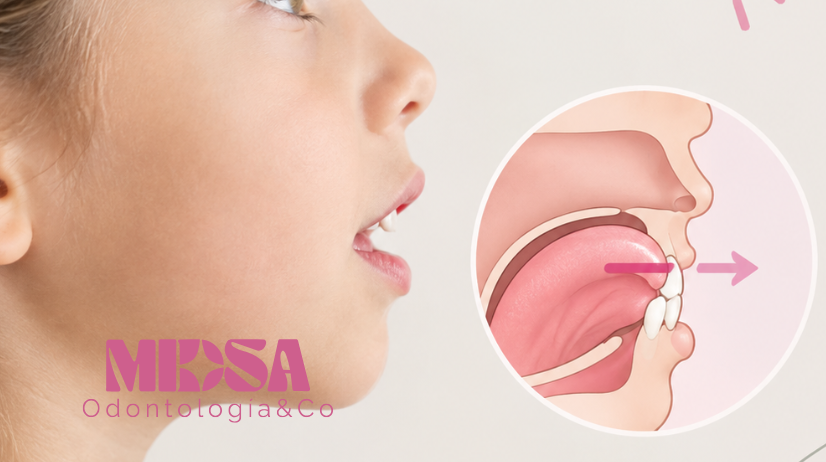
Does your child snore while sleeping? Although many families see it as something cute or temporary, Snoring in children is not normal and they can be a sign that something is wrong with your breathing or your oral health.
In this post, we explain why a child snores, what consequences it can have, and when it's advisable to go to a specialized clinic like MIDSA.
Why does a child snore?
The infant snoring They occur when air cannot circulate freely through the airways during sleep. The most frequent causes are:
- Mouth breathing (through the mouth) during the day and night.
- Enlarged tonsils or adenoids.
- Narrow palate or maldevelopment of the facial bones.
- Allergies or nasal problems (such as a deviated septum).
- Prolonged use of a pacifier or thumb sucking.
Important: If a child breathes through their mouth instead of their nose, their body and mouth will not develop properly.
Consequences of childhood snoring
Snoring isn't just an annoying noise. It can actually have significant effects on your health. general and oral health of the child, especially if it persists over time:
- Poor quality sleep: wakes up several times or does not rest well.
- Tiredness, poor school performance and lack of attention.
- Changes in behavior or irritability.
- Problems in the bite, misaligned teeth or a receding jaw.
- Higher risk of cavities and gingivitis due to Infant oral breathing.
When should you consult a doctor if your child snores?
These are some warning signs that indicate it's time to consult a professional:
- Your son He snores regularly (more than 3 nights a week).
- He breathes through his mouth even when he is awake.
- He/She has restless sleep, talks in his/her sleep, or moves around a lot at night.
- He wakes up tired or with dark circles under his eyes.
- He has overlapping teeth or a narrow palate.
How do we treat childhood snoring at MIDSA?
In our clinic, we work with a holistic approach, observing not only the mouth, but how your child breathes and sleeps. Our treatments may include:
- Assessment of breathing and nasal function.
- Myofunctional therapies to promote nasal breathing.
- Functional orthodontics if there are problems in bone development.
- Family support to improve breathing habits.
- Coordination with other professionals if necessary (pediatricians, ENT specialists, speech therapists, etc.).
In summary
- Snoring is not normal in children.
- It could be a sign that your child breathe through your mouth or has a developmental problem.
- The earlier it is detected, the better their growth, sleep, and oral health will be.
In MIDSA We can help you find the cause of the problem and support you with a personalized treatment that respects your child's development.