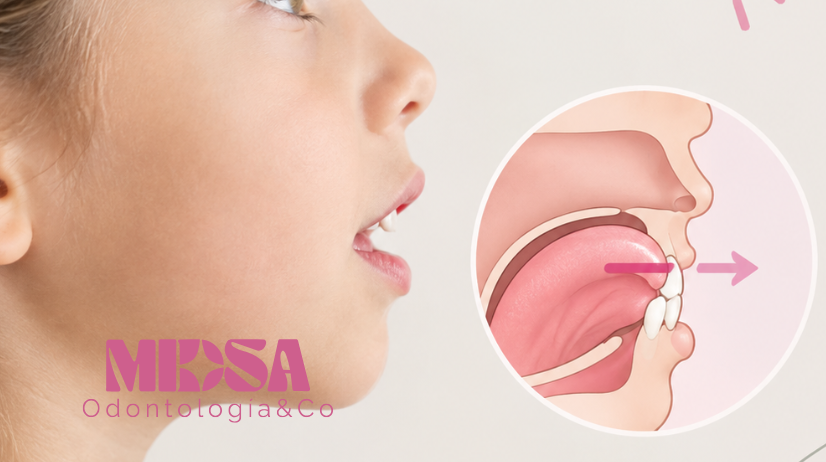
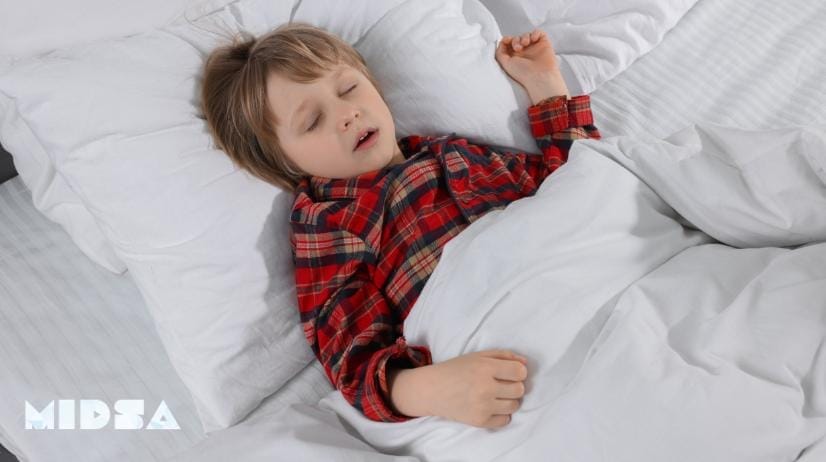
Mouth breathing syndrome produces several alterations in the stomatognathic system that affect the child aesthetically, functionally and psychologically.
In the next post we will focus on voice and speech disorders.
Mouth breathing can cause dental malocclusion, hinder proper lip sealing, the correct position of the tongue at rest, and ultimately, the alteration of one function can affect other functions and structures of the speech articulatory system.
Due to the relationship between respiratory function, phonation, and the articulation of words, difficulties, bad habits, or lack of control in the breathing pattern can alter the correct process of word articulation, potentially leading to speech disorders such as distortions in sounds due to incorrect airflow.
What are the consequences of the habit of mouth breathing?
- Mouth breathing causes problems for everyone, however children are the most vulnerable because they are in full development.
- Breathing is a function of the stomatognathic system. It is directly involved in voice and speech production; therefore, alterations in this system can affect these processes.
- Breathing is the foundation of the voice; if it is not done correctly, the voice gets tired, the sound does not come out naturally, and the words come out with effort.
- Breathing and speech are closely related; to speak well you must breathe well, when this does not happen speech becomes distorted, the rhythm is altered, etc.
- Some voice and speech disorders are caused by incorrect breathing technique.
- Phonorespiratory coordination avoids tension at the laryngeal level.
- Mouth breathing can alter the morphology of speech articulatory structures, affecting other functions of the stomatognathic system such as chewing and swallowing. In mouth breathing, the resting position of the tongue is abnormal, which promotes atypical swallowing.
In these cases, the assessment of dental professionals is essential in speech therapy. At Midsa Dentistry, we offer treatments for regulating respiratory function, including the Aragao Function Regulation (RFA) device, which, in coordination with speech therapy, will ensure the treatment's success.
Below are some orofacial exercises by age to practice correct breathing and speech development.
From 0 to 3 months:
Caress the corners of the mouth.
Caress upper and lower lips (in the center)
Gently brush your lips.
Caress cheeks with a cotton feather or cloth.
We offer him our finger to suck or hold.
We offer her a lip object and try to take it away from her.
From 3 to 6 months
Play at changing expressions.
Comb cheeks (brush).
Stroking the face.
Blow gently on your face.
Playing at throwing kisses.
From 6 months to 1 year:
Imitate facial expressions
Tongue games
From 1 to 3 years
Stretch your lips.
Pucker your lips.
Different tongue movements. (in-out, side to side, up and down)
Puff out and deflate cheeks.
Puff out one cheek and puff out the other.
Vibrate your lips.
From 3 years old:
Inflate balloons.
Try to keep the balloon floating in the air by blowing.
Move small balls of paper or playdough with a straw, play races, play soccer, etc.
Blowing through a straw into a glass of water.
Blowing soap bubbles.
Keep soap bubbles suspended in the air
To play the flute.