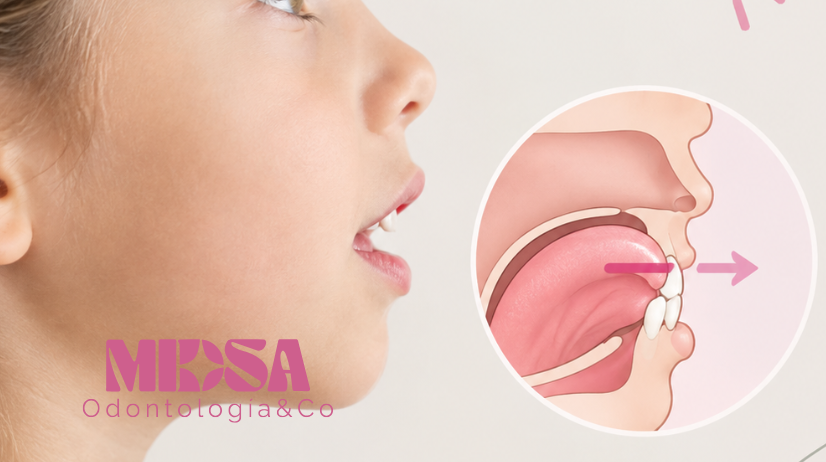
Ankyloglossia, or tongue-tie, is behind many cases of breastfeeding failure. Although the primary obstacle to ankyloglossia is breastfeeding, other factors include: underdeveloped palate, difficulty swallowing, and nasal breathing. Babies are born with a narrower face to facilitate passage through the birth canal, and later, the tongue's movement in the mouth opens the upper jaw and palate. Therefore, if this movement doesn't occur, the palate remains narrow, leading to breathing and swallowing problems. This, in turn, results in frequent respiratory infections and recurrent ear infections, as well as a need for orthodontic treatment due to malocclusion. Another difficulty is nasal breathing, since the closed palate leaves less space for the nasal cavities. Those with a tongue-tie may also suffer from mouth breathing syndrome, which manifests as increased snoring, a back posture that can cause cervical problems, and even scoliosis.
Data from the Spanish Society of Oral and Maxillofacial Surgery estimate that it affects 9.31% of children, and other studies also estimate the prevalence at around 101%.
Regarding the breastfeeding A tongue-tie can have consequences for both mother and baby. The baby's difficulty in moving their tongue makes sucking and milk flow more challenging. A short tongue-tie prevents the baby from properly latching onto the base of the areola and the lower part of the nipple with their tongue.
Consequences for the mother:
- Sore nipples and cracks, due to friction and poor grip.
- Poor drainage of the ducts. Along with cracks, this can promote the development of breast infection.
- Decreased milk production due to lack of effective stimulation.
- Tiredness and frustration, due to long takes.
- As a consequence of all the above, early weaning often occurs.
Consequences for the child:
- Poor breast grip.
- Very long takes.
- Higher intake of infant formula. Because it is rich in lactose, it is more difficult to digest. As a result, more digestive problems such as colic, gas, etc.
- Lower milk intake with little weight gain.
- Higher incidence of respiratory problems, such as snoring, pneumonia, and bronchitis. It can also contribute to the development of sleep apnea.
- Alteration in the bite when the teeth erupt.
- Speech-related problems.
Therefore, frenectomy is recommended in early life, as it is not an aggressive procedure and can be beneficial during breastfeeding or for speech when they are older, thus avoiding general anesthesia when diagnosed later.
If you need more information or have any questions, please don't hesitate to contact us; we'll be happy to help you with anything.